Sanded smooth
Resin
Fine sanding that removes layer lines and support marks, turning a printed texture into a smooth surface ready for primer or paint. Most painted finishes start here.
A printed part rarely ships raw. These are the 30 finishing and post-processing options in our catalogue — surface refinement, colour and coating, and functional features — each with the material families it applies to. Availability depends on the material you choose; the exact price is shown in your instant quote.
30 options3 categories5 material families
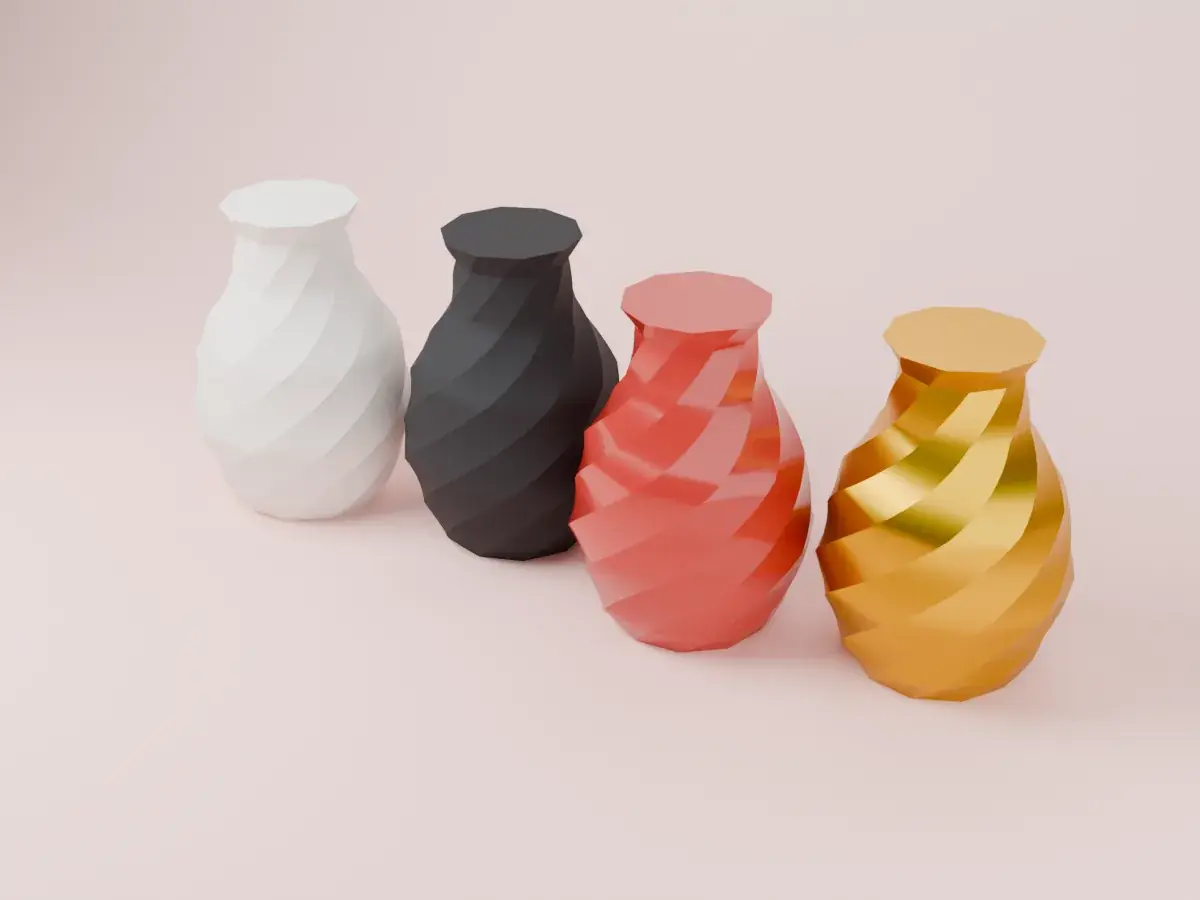
How the raw printed surface is refined — blasting, sanding, tumbling, polishing and vapour smoothing, from an even matte to a mirror shine.
Fine sanding that removes layer lines and support marks, turning a printed texture into a smooth surface ready for primer or paint. Most painted finishes start here.
Your logo or marking is printed onto the part with ink through a screen. Ideal for branding, labels and scales; send the artwork as a vector file.
A dry powder is applied and baked into a tough, even coating. It protects metal against corrosion and impact and comes in many colours — note the RAL code you need.
Abrasive blasting that removes support marks and evens out the surface to a uniform matte texture. It is the standard first step before painting or simply a clean industrial finish.
Mechanical polishing that reduces the as-printed roughness of metal parts. A smoother surface looks better and also improves fatigue life, because it removes the small notches where cracks start.
Metal parts tumble in a barrel with abrasive media, which smooths and deburrs all outer surfaces at once. An efficient way to improve the surface of many small parts.
A controlled solvent vapour melts the outer skin of nylon or TPU parts, sealing the surface and giving a smooth, slightly glossy finish. Parts become easier to clean and more resistant to dirt and moisture.
Fine glass beads are blasted at metal parts to give an even satin surface and remove loose powder. It improves look and touch without noticeably changing dimensions.
Multi-stage polishing to a mirror finish with very low surface roughness. Choose it for sealing faces, decorative metal and parts where friction must be minimal; only reachable outer surfaces can be polished.
Parts vibrate in a bowl of abrasive media that deburrs edges and smooths surfaces evenly. Gentler than barrel tumbling, so it suits finer details.
Colour and protective layers applied after printing — dyeing, spray paint, plating, anodising and clear coats.
A thin layer of metal (for example nickel or chrome) is plated onto the part for a metallic look and a harder, more wear-resistant surface. Priced on request, because the result depends on geometry and the plating metal.
A sanded surface with a matte topcoat that feels pleasant in the hand and hides fingerprints and small scratches well.
We sand the part, then spray an even high-gloss topcoat for a reflective, show-quality finish. Good for presentation models and consumer prototypes; gloss makes every surface flaw visible, so sanding is part of the job.
A soft-touch rubber paint with a silky, slightly grippy feel. It evens out the surface and resists everyday chemicals, which suits handles, remotes and consumer devices.
A UV-cured clear lacquer that seals the surface with a hard, glossy, scratch-resistant layer. Often added over paint or on clear parts.
A metallic-effect paint that gives a plastic part the look of brushed or polished metal while staying light and corrosion-free.
The part is soaked in a black dye bath, so colour goes into the surface layer instead of sitting on it. Scratches show far less than on paint, the colour is even, and dimensions do not change.
E-coating deposits paint electrically, so it reaches every edge, hole and recess with an even layer. It is the right choice when corrosion protection and uniform coverage matter more than a decorative gloss.
An electrochemical treatment that grows a coloured oxide layer on aluminium, so the colour is part of the surface rather than paint on top. Colours depend on the alloy (AlSi10Mg: black or grey; Al 6061: blue, green, red, yellow, black or silver) — write the colour you want in the notes.
Immersion dyeing in a colour of your choice. The dye penetrates the surface of nylon parts, giving even colour without adding thickness. Tell us the shade in the notes; very light colours are not possible on grey base material.
Clear resin is sanded by hand to an even, satin frosted look that diffuses light softly. Useful for light covers and design models where full transparency is not the goal.
A grey primer coat over a smooth-sanded surface, leaving the part ready for your own paint. It can only be ordered together with smooth sanding.
Sanding and coating that let light through while keeping the part slightly diffused, between clear and frosted. Often used for indicator windows and lamp parts.
Clear resin is sanded through very fine grits and lacquered until it is see-through. Very small bubbles can remain inside thick sections; tell us if optical clarity is critical.
Turning a printed part into an assembly-ready component — threads, brass inserts, machined features, welding and splicing of oversized parts.
Holes are tapped to cut internal threads so screws and bolts can be fitted directly. Mark the thread size (for example M4) and the holes on your drawing.
Parts larger than the build volume are printed in sections, joined, and the seams are filled and finished. We tell you before production where the joints will be.
Brass threaded inserts are heat-set into plastic parts, giving metal threads that survive repeated assembly. Specify thread size and number of inserts per part.
Oversized metal parts are printed in sections and welded together, with the weld seams ground and polished. Available for aluminium and stainless steel; we confirm the joint layout first.
Critical features are machined after printing to reach tight tolerances, flat sealing faces or precise threads. Mark the surfaces and tolerances on a drawing so we machine only what matters.
A thick, hard oxide layer on aluminium that strongly improves wear and corrosion resistance. Used for sliding parts, housings in harsh environments and tooling.
No finishes match those filters.
Finishes are applied to order and are material-dependent — not every option is available on every material, and some (welding, splicing) apply only to oversized parts. Pick a material on the materials page to see its available finishes, or upload your part and choose finishing in the instant quote.
Upload your file and get an instant, no-obligation quote in seconds.
Get your instant quote