One-off is the norm, not the exception
Made-to-measure geometry carries no tooling penalty — each device is printed to its own scan at the same cost per part.
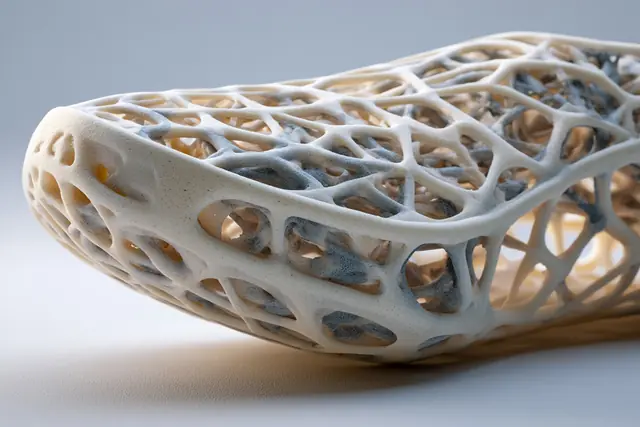
Personalised insoles, orthoses and sockets in durable SLS nylon — no machine to own.
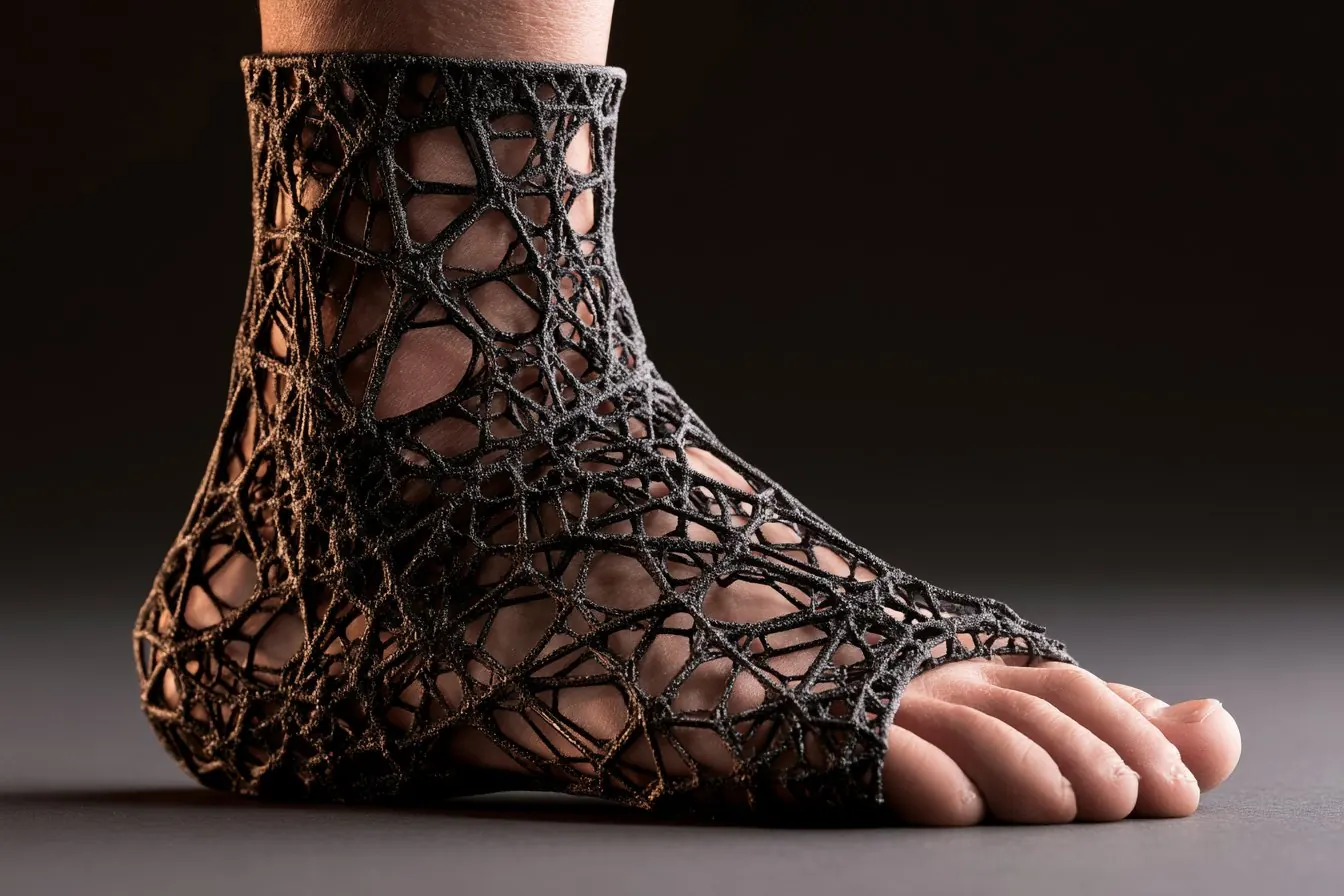
Orthopaedic technology is inherently personalised: every insole, orthosis and prosthetic socket is made to one patient. That is exactly the work additive manufacturing was built for, and exactly the work under most pressure from a shortage of skilled technicians. Powder-bed nylon turns a foot or limb scan into a durable, wearable device — and a small workshop can access it as a service instead of justifying its own industrial printer.
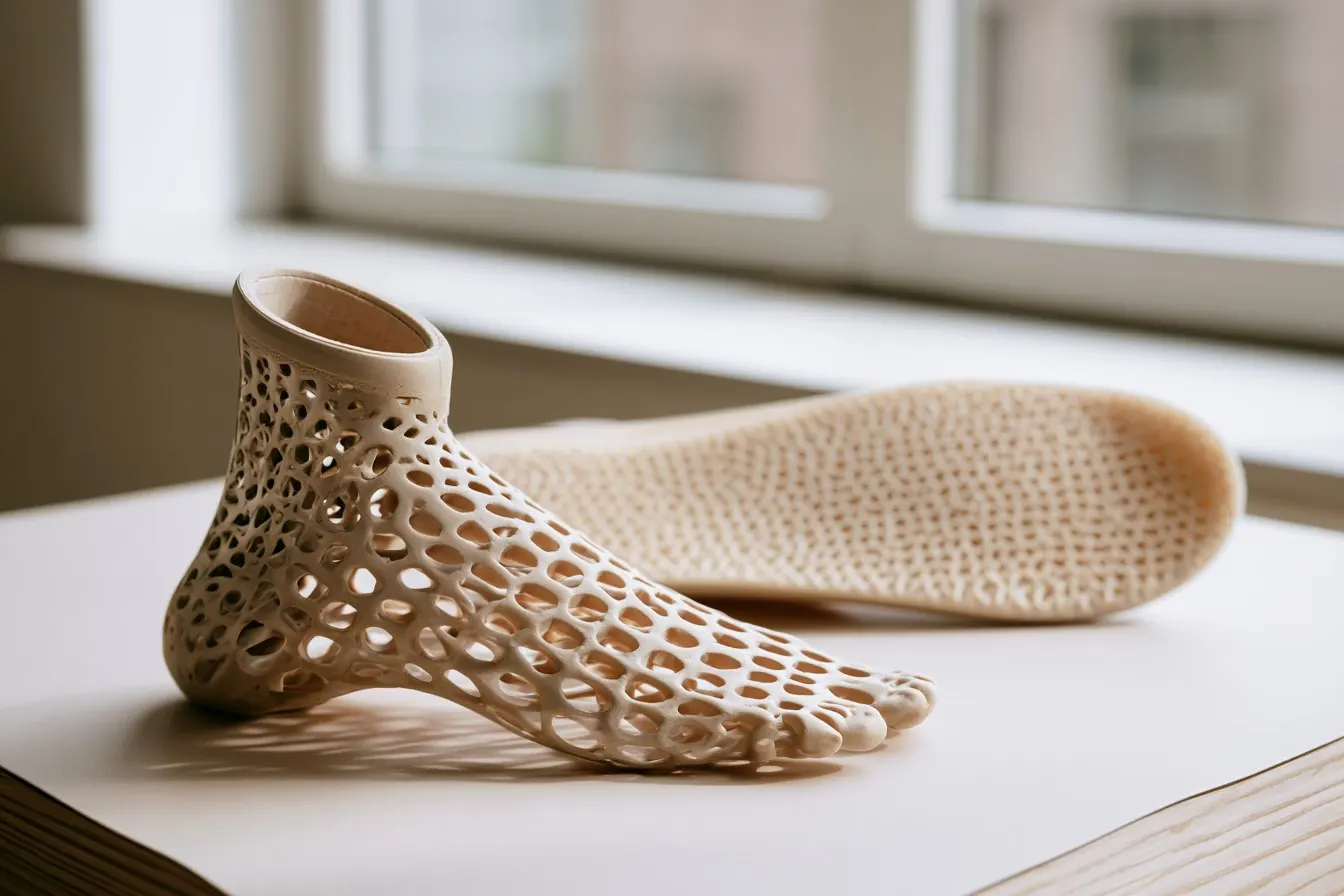
Made-to-measure geometry carries no tooling penalty — each device is printed to its own scan at the same cost per part.
SLS nylon is tough, flexible in thin walls and comfortable against skin over long wear cycles.
Outsourced production absorbs peaks without the capital and maintenance of an in-house machine.
Processes we useNylon — MJF / SLS →Flexible & PP — SLS →
Bio-based nylon with outstanding impact strength and fatigue resistance — the reference material for orthoses and sockets.
Same tough PA11 chemistry via Multi Jet Fusion for smooth surfaces and consistent mechanical properties.
Stiffer nylon for structural braces and rigid support elements.
Flexible, energy-returning elastomer for cushioning zones and soft-contact areas.
Typical starting points for the processes used in Orthopedics & Prosthetics — not contractual limits. Confirm critical tolerances with us before production.
| Min wall thickness | 0.7 mm (SLS) / 0.5 mm (MJF) |
|---|---|
| Typical tolerance | ±0.3 mm (or ±0.3%) |
| Layer height | 80–120 µm |
| Max build size | up to 360 × 560 × 660 mm |
| Supports | None — parts are self-supporting in the powder bed |
| As-built surface | Uniform matte; dyeable (black and colours) |
| Min wall thickness | 1.0 mm |
|---|---|
| Typical tolerance | ±0.3 mm |
| Layer height | 100–120 µm |
| Max build size | up to 380 × 380 × 284 mm |
| Supports | None — self-supporting powder bed |
| As-built surface | Matte; flexible in thin walls |
Finishes commonly specified for Orthopedics & Prosthetics. Availability depends on the material; the exact price is shown in your instant quote.
Sealed, comfortable surface for skin-contact orthoses and sockets.
See finishing details →Consistent colour for a finished device without added weight.
See finishing details →Deburrs edges and evens the surface across the whole part.
See finishing details →PA11 nylon is the reference — bio-based, high impact strength and fatigue resistance, comfortable in thin, flexible walls. PA12 adds stiffness for rigid braces; TPU handles soft cushioning zones.
Yes — send the STL from your scanning workflow and we print the device to that geometry. Each part is made to its own scan at the same per-part cost.
No — clinical assessment, fitting and any medical-device registration stay with the practitioner. We focus on a durable, dimensionally faithful part.
SLS nylon can be dyed (commonly black) and lightly finished; tell us the requirement and we will include it in the quote.
Upload your STL and get an instant, itemised price — no account required.
Upload your STL