Weight out, function in
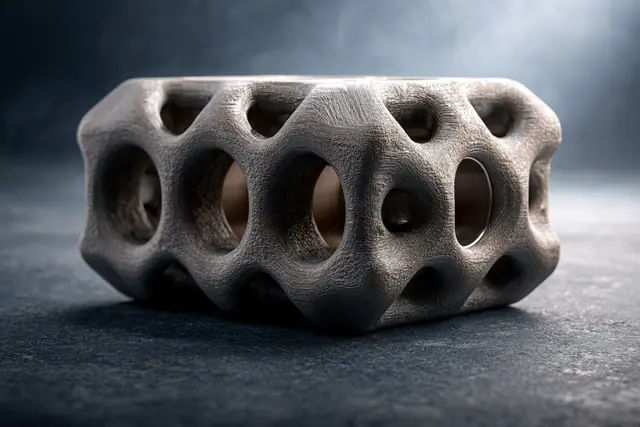
Topology optimisation and lattices remove mass that machining cannot reach, without sacrificing stiffness.
Titanium and Inconel parts with geometry you cannot machine, at small-batch economics.
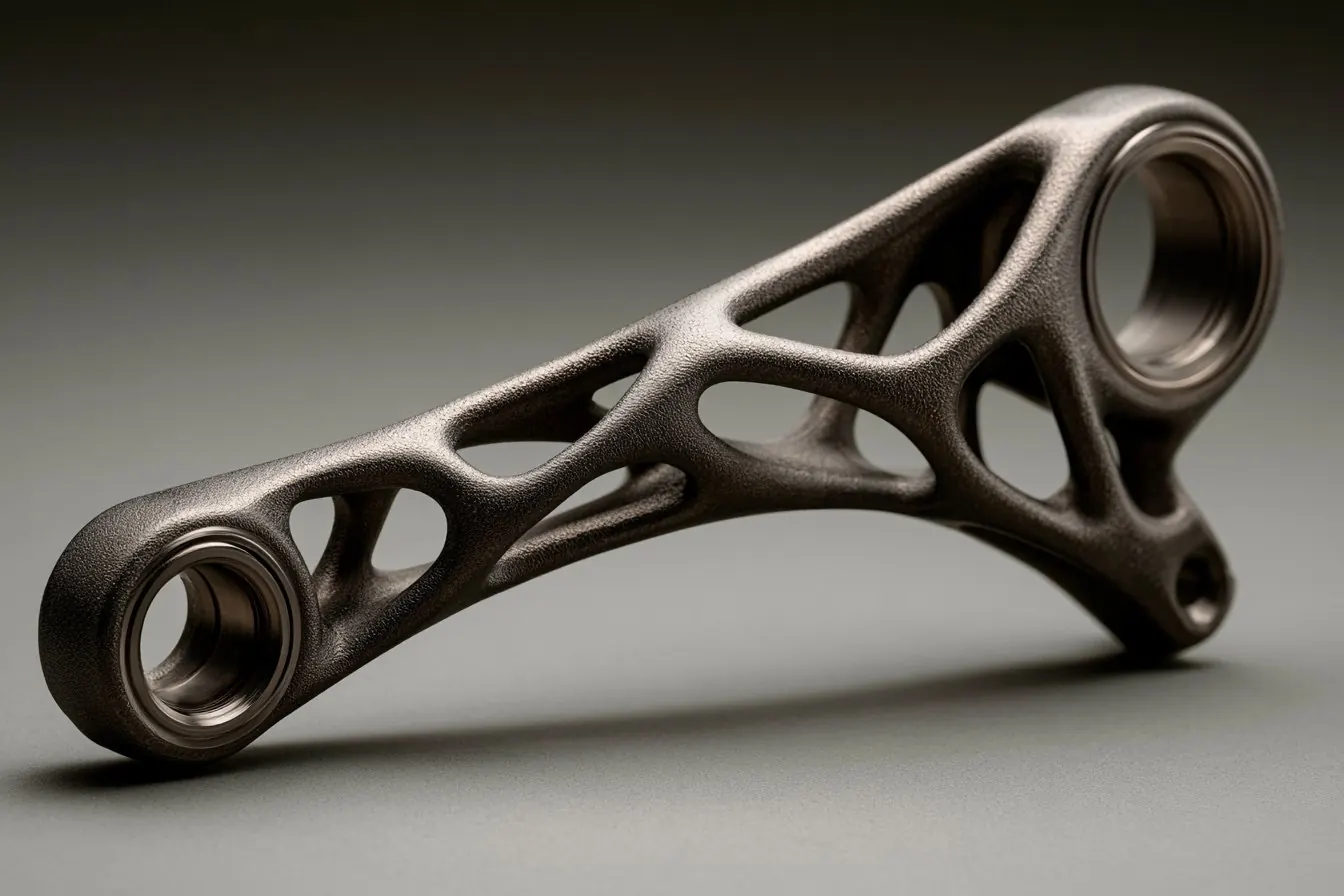
Aerospace sub-suppliers work in small batches, under extreme weight and temperature requirements, on parts that are often impossible to produce subtractively. Additive manufacturing answers all three: topology-optimised brackets, internal cooling passages and consolidated assemblies come off the build plate as single parts. Because the cost of the part is negligible against the cost of the system it serves, the value of getting geometry and lead time right is disproportionately high.
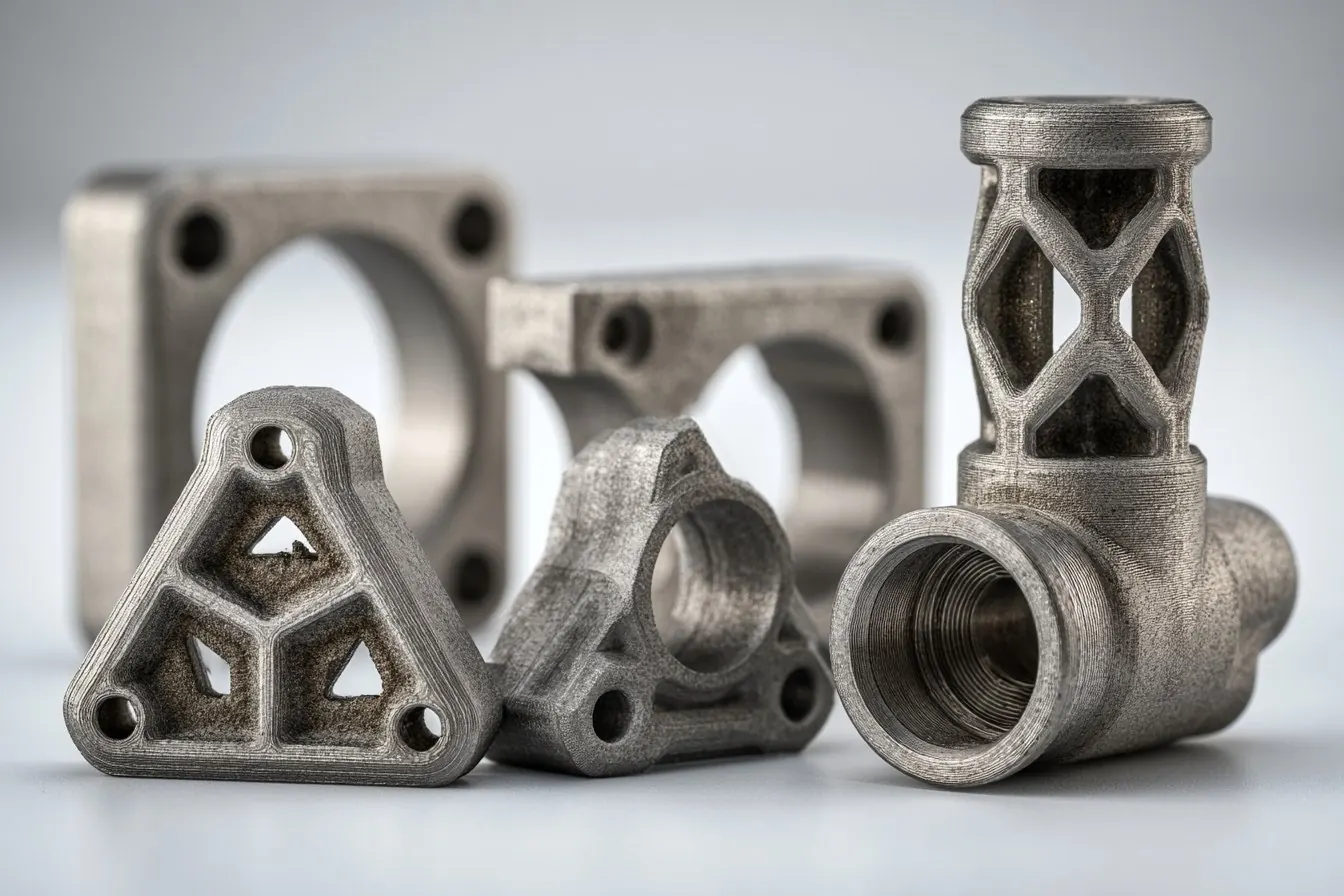
Topology optimisation and lattices remove mass that machining cannot reach, without sacrificing stiffness.
Assemblies of many machined pieces become one printed component — fewer joints, fewer fasteners, fewer failure points.
Inconel handles combustion-zone and exhaust temperatures; titanium delivers strength-to-weight for structural brackets and ducts.
No tooling means a run of one to fifty is priced on the part, not amortised against a mould.
Processes we useMetal — DMLS / SLM →Nylon — MJF / SLS →
Precipitation-hardened copper alloy for rocket-engine and thermal-management parts — high conductivity with high-temperature strength.
The aerospace titanium standard — exceptional strength-to-weight and fatigue performance for structural brackets and ducts.
Nickel superalloy retaining strength and oxidation resistance at high temperature for combustion and exhaust parts.
Lightweight aluminium alloy for stiff, low-mass brackets and housings; excellent as-built detail.
Carbon-fibre-reinforced nylon for stiff, lightweight tooling, jigs and non-flight fixtures.
Typical starting points for the processes used in Aerospace — not contractual limits. Confirm critical tolerances with us before production.
| Min wall thickness | 0.5 mm |
|---|---|
| Typical tolerance | ±0.1–0.2 mm (or ±0.2%) |
| Layer height | 20–60 µm |
| Max build size | up to 420 × 420 × 450 mm |
| Supports | Required; removed, then stress-relieved / heat-treated |
| As-built surface | Ra ≈ 8–15 µm; critical faces machined on request |
| Min wall thickness | 0.7 mm (SLS) / 0.5 mm (MJF) |
|---|---|
| Typical tolerance | ±0.3 mm (or ±0.3%) |
| Layer height | 80–120 µm |
| Max build size | up to 360 × 560 × 660 mm |
| Supports | None — parts are self-supporting in the powder bed |
| As-built surface | Uniform matte; dyeable (black and colours) |
Finishes commonly specified for Aerospace. Availability depends on the material; the exact price is shown in your instant quote.
Precision interfaces, bores and datum faces on printed metal parts.
See finishing details →Wear- and corrosion-resistant surface for aluminium brackets.
See finishing details →Uniform, controlled surface finish across the part.
See finishing details →Functional threads for fasteners and assembly.
See finishing details →We produce to your drawing and material spec. Flight qualification, AS9100 traceability and NADCAP-level process certification are defined by your programme; share the requirement and we will advise on material, orientation and post-processing to support it.
Ti₆Al₄V for strength-to-weight structural parts, Inconel 718 for high-temperature combustion and exhaust components, and AlSi₁₀Mg / Al 6061 for lightweight brackets and housings.
Yes — that is where additive wins. Lattices, internal channels and multi-part consolidations print as single components; send the optimised geometry and we will confirm printability.
Stress relief and heat treatment for metals, support removal, and machining of critical faces to tighter tolerances. Ask for the finish your drawing calls out.
Upload your STL and get an instant, itemised price — no account required.
Upload your STL