De-risk the tool
Verify every enclosure, board carrier and connector cover physically before a mould is cut.
Prototype housings and carriers — including ESD-safe and flame-retardant — before you commit to a mould.
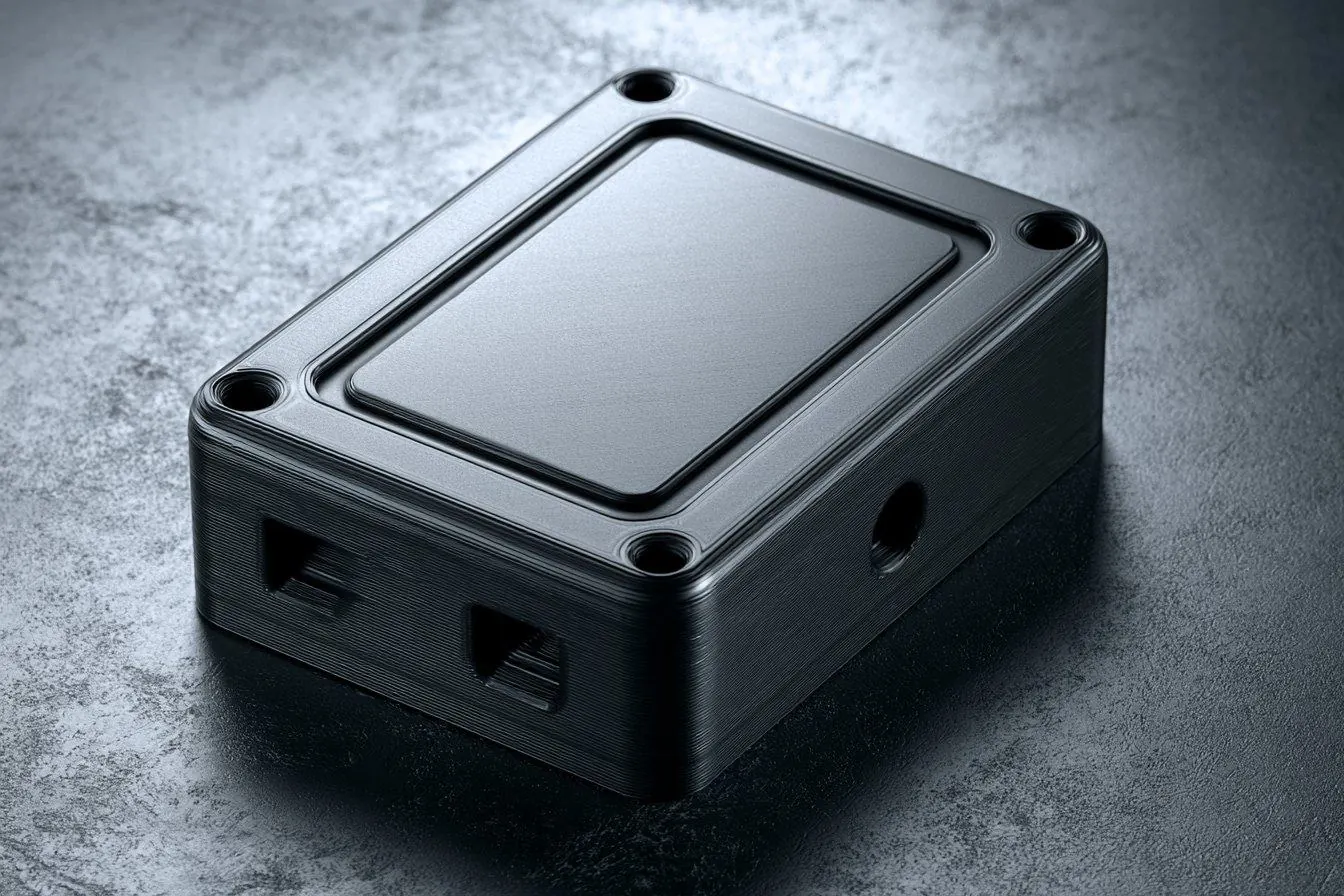
An injection mould for an electronics enclosure costs tens of thousands and takes weeks; a single mistake in the tool costs more than a hundred prototypes. Additive manufacturing lets a hardware team physically verify fit, connector alignment and ergonomics — and validate ESD or flame-retardant behaviour — before that money is committed. It also serves the low-volume and service-part runs that never justify tooling at all.
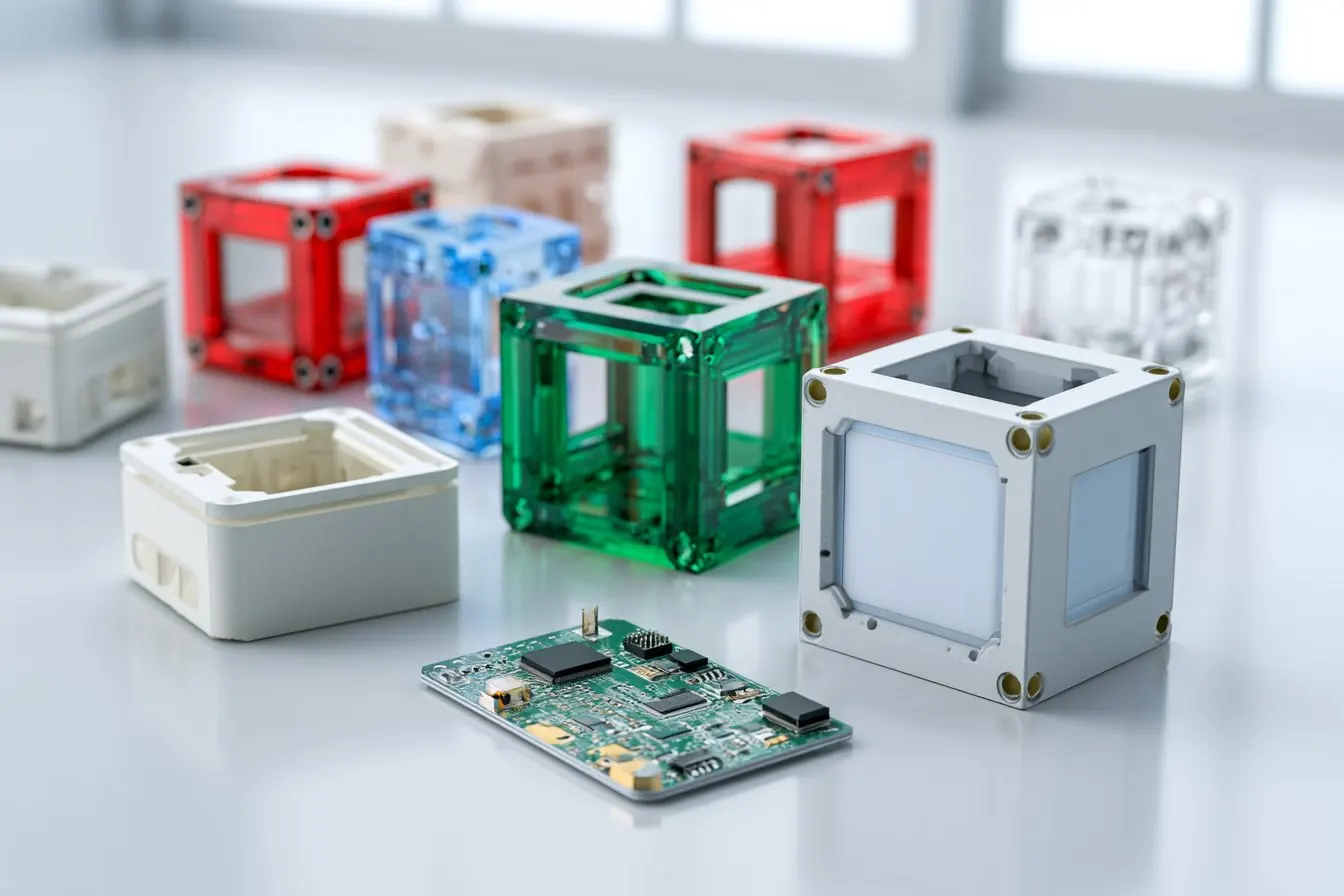
Verify every enclosure, board carrier and connector cover physically before a mould is cut.
Static-dissipative resin protects sensitive electronics during handling, assembly and test.
FR-grade resin supports enclosures with elevated fire-safety requirements.
Short runs and legacy housings are produced on demand, with no tooling to store.
Processes we useResin — LCD →Nylon — MJF / SLS →Flexible & PP — SLS →
Electrical connectors, busbars and conductive parts — excellent electrical and thermal conductivity.
Static-dissipative resin for trays and housings that handle static-sensitive electronics safely.
FR-grade resin for enclosures with fire-safety requirements.
Durable nylon for functional enclosures and carriers with living hinges and snap fits.
Glass-filled polypropylene for chemically resistant, low-warp housings.
Typical starting points for the processes used in Electronics & Enclosures — not contractual limits. Confirm critical tolerances with us before production.
| Min wall thickness | 0.4 mm (fine features from 0.2 mm) |
|---|---|
| Typical tolerance | ±0.1–0.2 mm |
| Layer height | 35–100 µm |
| Max build size | up to 200 × 125 × 210 mm |
| Supports | Required; removed and UV post-cured |
| As-built surface | High detail; smooth finish |
| Min wall thickness | 0.7 mm (SLS) / 0.5 mm (MJF) |
|---|---|
| Typical tolerance | ±0.3 mm (or ±0.3%) |
| Layer height | 80–120 µm |
| Max build size | up to 360 × 560 × 660 mm |
| Supports | None — parts are self-supporting in the powder bed |
| As-built surface | Uniform matte; dyeable (black and colours) |
| Min wall thickness | 1.0 mm |
|---|---|
| Typical tolerance | ±0.3 mm |
| Layer height | 100–120 µm |
| Max build size | up to 380 × 380 × 284 mm |
| Supports | None — self-supporting powder bed |
| As-built surface | Matte; flexible in thin walls |
Finishes commonly specified for Electronics & Enclosures. Availability depends on the material; the exact price is shown in your instant quote.
Labels, logos and legends printed directly on the enclosure.
See finishing details →Clean, non-reflective finish for device housings.
See finishing details →Durable threads for repeated assembly and service access.
See finishing details →Even surface for a finished prototype or low-volume housing.
See finishing details →Yes — static-dissipative ESD resin for trays and housings that handle static-sensitive electronics. Tell us the standard you test against so we select the correct grade.
Yes — an FR-grade resin is available for enclosures with fire-safety requirements. Flame-retardant behaviour depends on the specific grade and any coating; share the target standard.
An injection mould costs tens of thousands and takes weeks; one tooling mistake costs more than a hundred prototypes. Printing lets you verify fit, connectors and ergonomics before committing.
Yes — short runs and out-of-production housings are printed on demand with no tooling to store.
Upload your STL and get an instant, itemised price — no account required.
Upload your STL